

British Transport Police faces criticism at London Assembly for failing to come to aid of Transport for London staff, reports Kumail Jaffer, Local Democracy Reporter
Transport for London (TfL) and the British Transport Police (BTP) must do more to protect frontline staff, they’ve been told – amid shocking accounts of violence against workers.
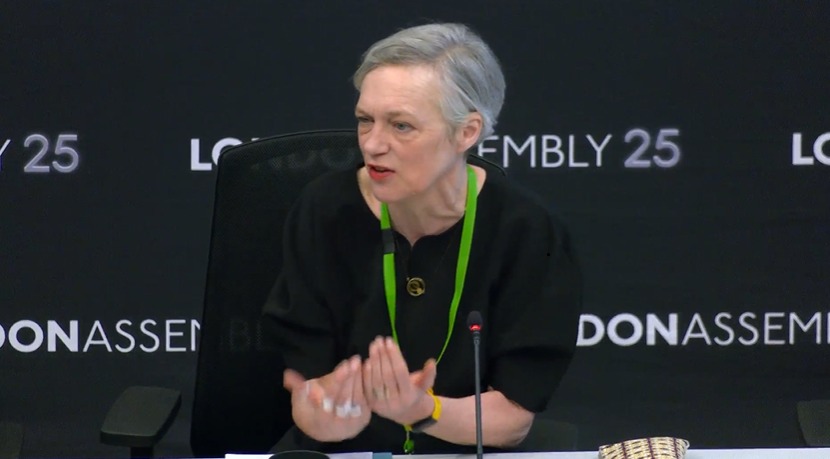
A cross-party London Assembly committee heard on Tuesday (24th) of harrowing stories of abuse and violence directly from frontline workers as part of their new investigation into assaults on transport staff.
Luke Banks, who works as a revenue control officer on the London Underground, was assaulted at King’s Cross Station last year after stepping in to defend a colleague who was being threatened.
He told assembly members: “The customer turned on me, shoved us both in the chest and started screaming death threats.”
But it wasn’t so much the incident as the lack of assistance from the authorities that worried him.
Banks said: “We didn’t hear anything from British Transport Police (BTP) for two hours – this was concerning […] at a major station you’d expect BTP to come out fairly quickly, but I had to rely on colleagues to keep me safe and keep the person away from me.”
He added: “We’ve had broken bones, noses, people ending up in A&E – it’s a challenging environment to try and control revenue.”
Paul Feakes, a revenue control inspector for London Underground, was punched twice by a member of the public and “dragged across the ticket hall floor” during one incident. Feakes said BTP were slow to respond in his experience, only turning up 30 minutes after the Met Police attended the scene.
In the subsequent case against the suspect, Feakes said he had to keep chasing updates for fear it would “fall by the wayside”.
He added: “Many members of staff do not report incidents anymore – it’s a case of ‘why bother, nothing gets done, and managers are likely to question my own actions as to why we were hit’.”
The London Assembly also heard from bus driver Selington Rock Santan Fernandes.
“Someone started shouting and trying to break the cabin door after I announced a diversion,” Fernandes said. “He broke it – it’s something we’ve complained about again and again, it was easy for him to do so.
“He then pulled my hair and started hammering – I couldn’t see right or left and was taken to the hospital. I couldn’t sleep the whole night.”
Two trends running through the committee session was the lack of urgency from British Transport Police (BTP) in responding to incidents and the absence of a smooth, efficient reporting system to TfL. According to panellists, this has meant that many incidents go unreported.
Banks said: “BTP are just not very effective at the moment. We’ve had some horrific assaults in recent years – I’ve never seen anything like it.
“It takes me 45 minutes to do a report at the moment. TfL have told us there is a new system coming for ages. The fact that most assaults aren’t logged and the statistics are still so high shows the scale of the problem.
“Reporting should be easier, more streamlined. But the timeline for delivering that [the new system] is a bit of a running joke. There are lots of silly things within the current system that have been pointed out. The length of time it takes to report things is an issue – it doesn’t need to be as drawn out as it is.”
There were 200 violent incidents every week against transport staff in London in 2023/24 – the latest data available – with a total of 10,493 reports of work-related violence and aggression that year.
This includes a 35% increase in incidents against rail staff and 18.5% against bus drivers since 2021. Data obtained by the London Assembly’s transport committee also showed a sharp uptick in reports between October and December 2024 and the same period in 2025.
Last year the Local Democracy Reporting Service (LDRS) heard from one bus driver operating a late-night route about his own assault, when he was punched by two passengers and made to give them money.
The incident provoked sharp criticism from the Unite trade union, with national officer for passenger transport, Wayne King saying: “The mayor, TfL and bus operators need to take action to protect drivers.”
Siwan Hayward, director of security, policing and enforcement at TfL, told the committee: “It absolutely is our priority to seek to remove the risk of workplace violence and aggression.
“We remain concerned that workplace violence is underreported. We want every incident to be reported. The overall total has remained stable, but physical incidents have reduced.
“Discussing and promoting how seriously we take workplace violence is a constant theme when we have internal meetings. We want to give colleagues the confidence that they are protected and supported.”
Emma Croxall, work related violence and aggression strategy and support manager at the network, said there had been a 12% reduction in physical incidents and a 20% fall in verbal abuse and threats.
She said a new system for reporting incidents will be piloted in June and rolled out further in September for some staff.
A British Transport Police spokesperson said: “No person on the rail network should ever be subjected to violence or abuse, especially rail staff who are simply doing their job. We take assaults towards members of rail staff extremely seriously and it will not be tolerated on the network under any circumstance.
“We continue to work closely with partners including TfL to tackle offences and we will explore all investigative avenues to identify and prosecute offenders.
“We encourage passengers or staff who experience or witnesses any crime onboard a train or at a station to report it to us by texting 61016 or calling 0800 40 50 40.”
 No news is bad news
Independent news outlets like ours – reporting for the community without rich backers – are under threat of closure, turning British towns into news deserts.
The audiences they serve know less, understand less, and can do less.
If our coverage has helped you understand our community a little bit better, please consider supporting us with a monthly, yearly or one-off donation.
Choose the news. Don’t lose the news.
Monthly direct debit


Annual direct debit

£5 per month supporters get a digital copy of each month’s paper before anyone else, £10 per month supporters get a digital copy of each month’s paper before anyone else and a print copy posted to them each month. £50 annual supporters get a digital copy of each month's paper before anyone else.

More information on supporting us monthly or yearly
More Information about donations





 Enjoying Enfield Dispatch? You can help support our not-for-profit newspaper and website from £5 per month.