

A consultation is due this spring but the Labour minister who will make the final decision this week expressed his enthusiasm for building on Enfield’s Green Belt, reports James Cracknell

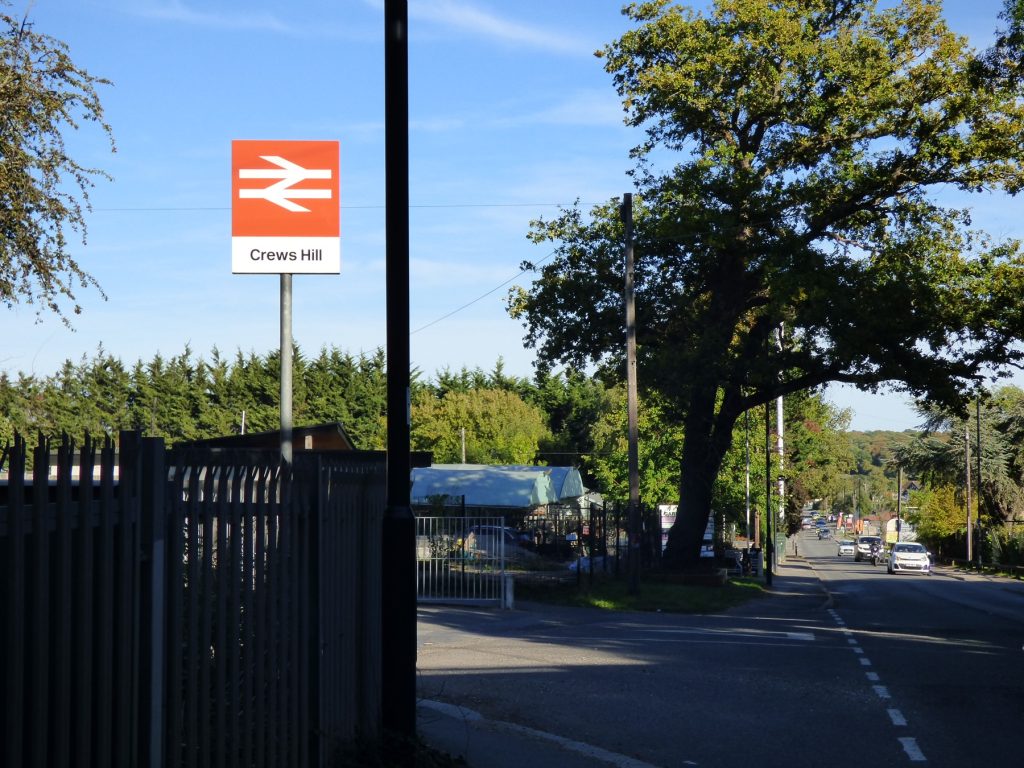
The Labour minister responsible for taking the final decision on which new towns will be going forward has said the “growth potential” of Crews Hill is “clear as day”.
Crews Hill was last year named by a government taskforce as one of twelve potential new towns around the country that would deliver thousands of homes, alongside an area of farmland in Enfield dubbed ‘Chase Park’.
The new town is slated for at least 21,000 homes, more than double what Enfield Council had previously earmarked for the same Green Belt areas in its new Local Plan.
The government’s New Towns Taskforce stated in its September report that Crews Hill and Chase Park presented “a unique opportunity to create a new, family-centred community” within London, while Housing Secretary Steve Reed even suggested that it could be among the first three new towns to see “spades in the ground” by 2029.
A decision from the government on each new town site, followed by a public consultation, is expected this spring.
Housing minister Matthew Pennycook, who works under Reed in the Ministry of Housing, Communities and Local Government, was this week quizzed by a parliamentary committee of MPs during a 90-minute session on new towns.
Regarding Enfield’s new town proposal, Pennycook was enthusiastic, as he told MPs: “On Crews Hill in particular, the growth potential is as clear as day. In terms of an urban extension that will unlock economic growth and productivity in London that will accelerate housing delivery […] that is a very, very promising location.
“We will build the evidence base and we will see whether it makes the final cut of adopted sites and that will then come with a bit more detail – what the funding implications are, and the delivery vehicle.”
One member of the housing committee in parliament is Broxbourne MP Lewis Cocking, whose constituency immediately borders Enfield borough to the north. The Conservative MP asked Sir Michael Lyons – the author of the New Towns Taskforce report who appeared alongside Pennycook during the debate yesterday (Tuesday 13th) – whether any “impact assessments” had been done on local roads such as the M25 and A10.
Cocking said: “What I am trying to get at here is, how did you pick those top three locations [including Crews Hill] and what assessment of current infrastructure […] and current roads, have you done to recommend this in the top three?”
Sir Michael responded: “We did detailed examination of infrastructure constraints, we looked carefully at planned investment, but our judgement was really founded not on trying to find reasons to exclude a location but to reveal what would need to be done to make that an effective location.
“So the fact it has ended up in the top twelve means – although there are infrastructure challenges across most of the interesting locations that came forward for consideration – our focus was on being clear what was needed and that it was reasonable to expect that those needs would be met over the life of a new town – 20 or 30 years – and not all having to be satisfied on day one.”
But Cocking continued his point and said: “The M25 and the A10 are gridlocked at rush hour. You want to put 22,000 homes right next door to that – and you are not saying you can only do it if you put the infrastructure in first, you have said you have done an assessment and everything seems okay.”
Sir Michael again responded: “We have emphasised that a new generation of new towns absolutely must give priority to public transport solutions. It simply cannot be the car-borne examples that you find on many recent large developments, partly because of the pressures on existing road networks but partly because of the environmental costs and health costs of continued growth in car-borne transport.
“So our model is very much one that is less dependent on car-borne travel than previous new towns. That is one of the distinctions of the place-making principles that we have put forward.
“I don’t mean to suggest that there won’t be car journeys that are generated by a new town and additional population. But for us the issue of how that is managed downwards is very important.”
Cocking then claimed that Sir Michael was “on a different planet” if he thought “no-one is going to use a car” but the former BBC Trust chair countered: “This [Crews Hill] is an area that has a station and it is possible to envisage the expansion of rail-based transport from that area, which would certainly mitigate the demands on the road network.”
Sir Michael had earlier explained that the government had given his taskforce a “strong remit” and that “we were to focus initially on economic growth and look to areas where current housing issues, of both availability and price, appear to be inhibiting economic growth”.
He added: “There was an emphasis on locations where work could begin quickly, given the pressing demands for housing supply.”
Chris Curtis MP, a Labour committee member, said that “previous iterations” of new town programmes in recent decades had “not ended up in as ambitious a place” because “the implementation has not worked”. He asked why Pennycook had “confidence that this time is going to be different”.
The minister replied: “In developing the programme we were inspired by the proud legacy of the post-war governments, the three waves of new towns that came forward. But part of this exercise is about learning the lessons of what went right and what lessons are to be learned, and that is incorporated into the report.”
Later asked how opposition campaigns might influence the decisions made on locations, Pennycook said: “We have always made clear that in the final analysis we will make decisions on these sites in the national interest.
“I am going to make decisions, as the minister responsible, for what sites we consult on as proposed sites to be adopted. I am then going to listen to the feedback from the consultation to make the final decision on the sites later on in the spring.”
Pennycook also explained that development corporations – such as the one which helped deliver the London 2012 Olympic Games – were “the primary vehicle by which we wish to take forward these sites” but that other types of “delivery vehicle” were still possible.
Development corporations can be led centrally or by regional mayors and involve harnessing planning powers for the designated area, meaning a reduced role for the local council.
Another committee member, Liberal Democrat MP Will Forster, pointed out that new town delivery bodies “are likely to require significant up-front funding” but that last year’s budget announced by Chancellor Rachel Reeves contained “nothing” relating to the programme. He asked Pennycook if he had an estimate on how much was needed.
Pennycook said: “It is not accurate to say there is no funding available for new towns. There isn’t a new towns funding pot but the programme will be delivered with a combination of existing grant funding pots.”
Local news needs your support
We are proud that we were at the forefront of reporting on the recent local elections. We can’t do this without the support of our readers.
Independent news outlets like ours – reporting for the community without rich backers – are under threat of closure, turning British towns into news deserts.
If our coverage has helped you understand our community a little bit better, please consider supporting us with a monthly, yearly or one-off donation.
ACT NOW!
Monthly direct debit


Annual direct debit

£5 per month supporters get a digital copy of each month’s paper before anyone else, £10 per month supporters get a digital copy of each month’s paper before anyone else and a print copy posted to them each month. £50 annual supporters get a digital copy of each month's paper before anyone else.

More information on supporting us monthly or yearly
More Information about donations





 Enjoying Enfield Dispatch? You can help support our not-for-profit newspaper and website from £5 per month.