


In the second part of a three-month series, local school students Megan Ledain, Jessica Ampong and Charlotte O’Donoghue speak to classmates about what the government can do to protect children from social media harms
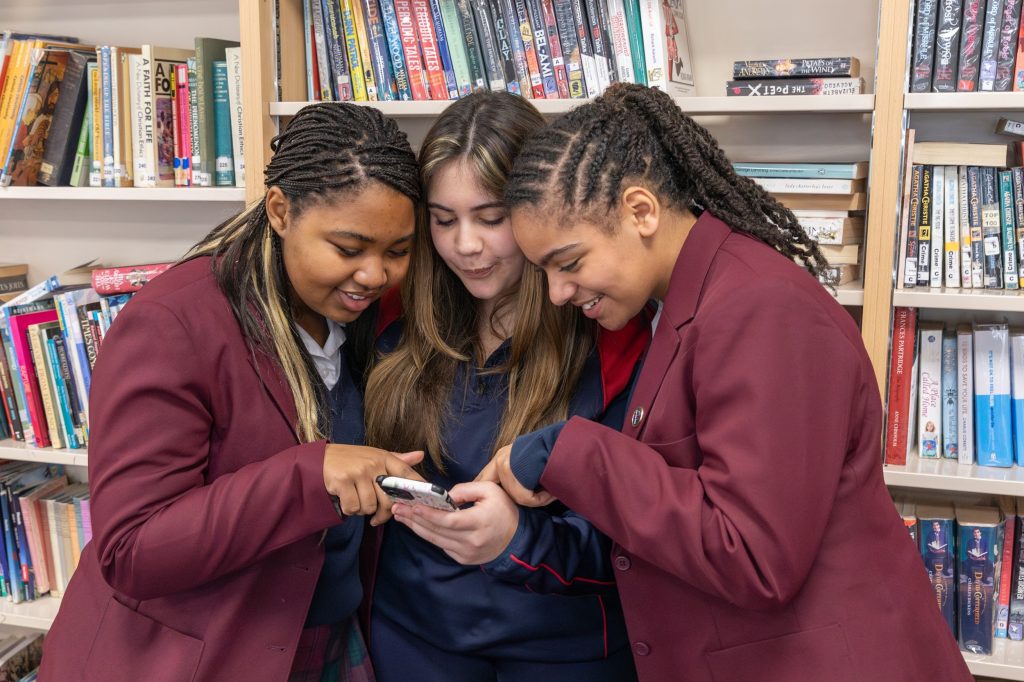
In our first article, we shared our own perspectives as students growing up with social media and asked a big question: should social media be banned for under-16s in the UK?
It’s an issue that is increasingly being discussed by politicians, parents and schools. Some believe stronger rules could protect young people from harm online, while others think that social media is now a big part of everyday life and banning it may not be realistic.
In this article, we speak to students in our school, teachers, parents and other adults to gather different perspectives about the proposed ban.
What students think
Many students we spoke to felt that setting the age limit at 16 is unrealistic, because so many young people already use social media. One student said: “I think it’s good, but I think 16 is a bit too high, because all of us now already have social media and people younger than us do too. Times are
changing. Most people have it and use it to talk to people, because not everyone can go outside every day and talk to their neighbours.”
For many young people, being online feels like a normal part of everyday life. Social media is how they stay connected with friends, organise plans or simply keep in touch.
Some students said that learning how to use online spaces is becoming an important skill. One explained: “Being online is part of people’s lives. Even in school we use things like [Microsoft] Teams, where we need to learn how to be online. If we wait until we’re 16, we won’t know how to use it properly, which is pointless because we’ll need it in the future.”
Others mentioned practical reasons for using social media and messaging platforms. “It’s easier because you can communicate with your parents if something happens,” one student said.
Education instead of a ban?
While many students were not in favour of a complete ban, they recognise that social media can sometimes cause problems, suggesting that education and parental guidance might be more effective than removing access completely.
One student said: “I think the age limit should be lower, around 13 or 14. Instead of doing a complete ban, there should be more parental controls.”
Another said: “Instead of removing it completely, they should add more lessons in school where we learn how to stay safe online. Then we can still use it, but at least we’ll know how to avoid serious situations.”
Some questioned whether banning social media would make digital safety education less meaningful. One stated: “That’s the whole point of workshops like ‘Building Futures: Safer, Smarter Families’, to learn how to stay safe. If social media is just taken away from us, what’s the point of learning about it?”
The feedback suggests many see social media as something that needs to be managed responsibly rather than removed entirely.
Teachers’ perspectives
The teachers we spoke to had slightly different views, often shaped by what they see in the classroom.
One said she generally supports the idea of restricting social media use among younger teenagers because of the impact she believes it has had on attention spans and that it changes young people’s whole neurology, and the way they teach has changed because of social media.
The general consensus is that constant digital engagement has made it harder to keep students focused in class. It a concern shared by many adults and that it may be affecting how young people learn, focus and interact.
Recognising the risks
Even students who were against a full ban acknowledged that social media does come with risks. One student pointed out that restrictions could have some benefits. They said: “I think it could help keep people safe from things like cyberbullying.”
This shows that many young people understand both sides of the argument; they value the opportunities social media offers for communication and connection, but are also aware of the potential threats.
A continuing conversation
After speaking to students, teachers and adults, one thing is clear: the debate around social media and young people is far from simple. Students feel that a complete ban at 16 would be unrealistic and suggest more education, digital safety lessons and parental controls.
Teachers and adults are more focused on the potential negative impacts of social media on learning, behaviour and wellbeing.
Next month, we will reflect on everything we have heard and share our own recommendations for what schools, parents and the government could do to help young people navigate social media safely in the future.
Editor’s note: In March, MPs voted against a proposal to ban under-16s from using social media. A consultation will now explore the issue further, with a range of restrictions still under consideration.
This article is published with support from LocalMotion Enfield, part of a UK-wide movement for community-led change

 No news is bad news
Independent news outlets like ours – reporting for the community without rich backers – are under threat of closure, turning British towns into news deserts.
The audiences they serve know less, understand less, and can do less.
If our coverage has helped you understand our community a little bit better, please consider supporting us with a monthly, yearly or one-off donation.
Choose the news. Don’t lose the news.
Monthly direct debit


Annual direct debit

£5 per month supporters get a digital copy of each month’s paper before anyone else, £10 per month supporters get a digital copy of each month’s paper before anyone else and a print copy posted to them each month. £50 annual supporters get a digital copy of each month's paper before anyone else.

More information on supporting us monthly or yearly
More Information about donations





 Enjoying Enfield Dispatch? You can help support our not-for-profit newspaper and website from £5 per month.