

The new draft London Plan claims that construction on brownfield sites alone will not meet the city’s housing needs going forward, reports Kumail Jaffer, Local Democracy Reporter
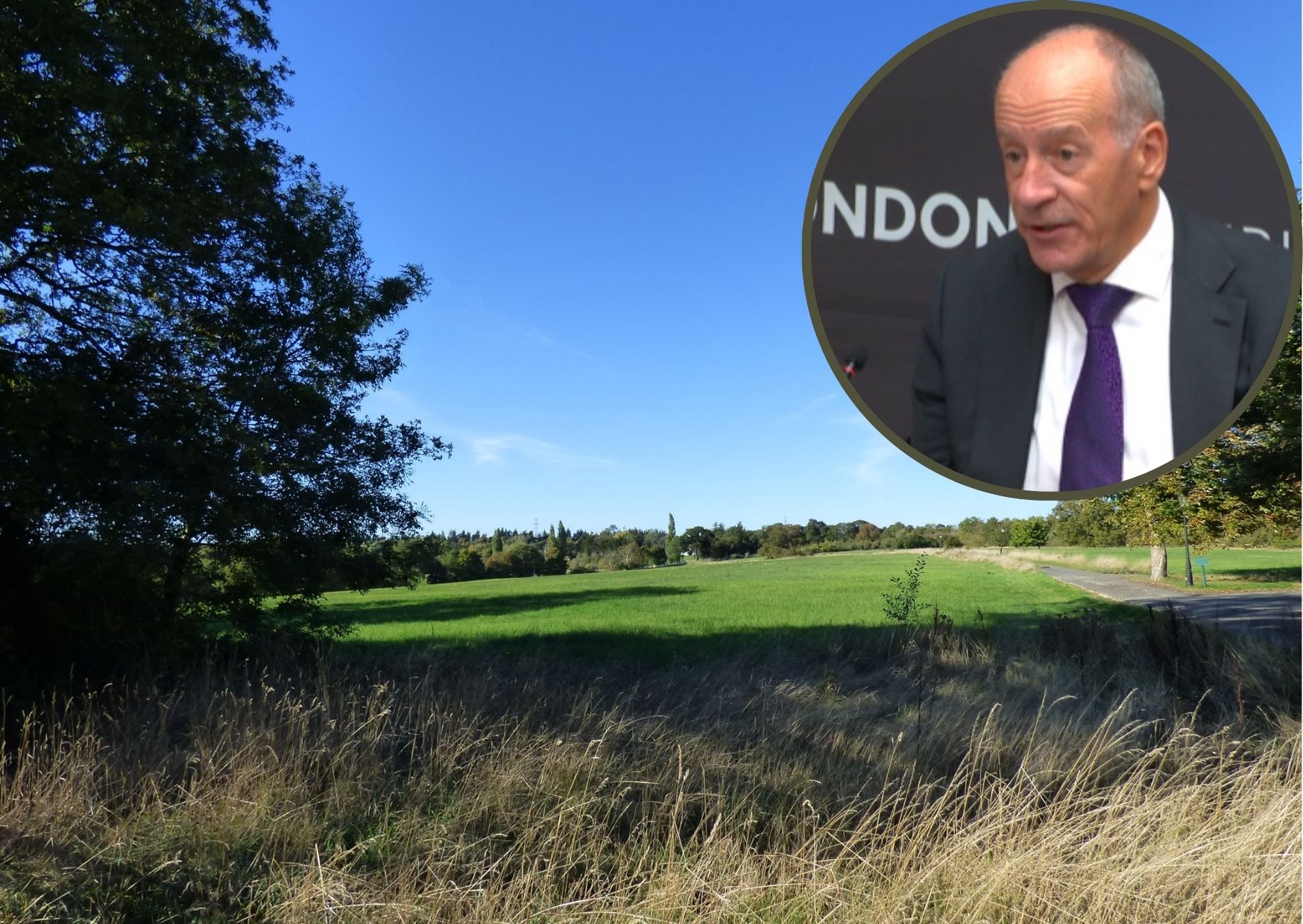
City Hall has defended its “pragmatic” approach to building new developments on high-quality Metropolitan Green Belt sites across London amid accusations of carving up land that’s long been protected.
The new draft London Plan, which directs development regulations across the capital, claims that construction on brownfield sites alone will not meet the city’s housing needs going forward.
Greater London Authority (GLA) officials have identified ten broad locations for growth (BLGs) within the Green Belt where there are good rail links, including at Crews Hill in Enfield, part of the site for one of the government-led ‘new towns’.
Another Green Belt BLG area with nearby stations identified by the draft London Plan is in Barnet borough.
Around 56,000 of the 558,000 homes that Mayor of London Sir Sadiq Khan is hoping will be built in London between 2028 and 2037 are located within the Green Belt.
Jules Pipe, Khan’s deputy mayor for planning, said City Hall was taking a “pragmatic” approach to meeting the capital’s housing needs.
This involves taking advantage of “well-located pockets of Green Belt” to develop them at a “reasonable density” with six-storey developments.
However, he stressed that the mayor was still focused on a “brownfield-first approach”.
“This is after having sweated all other sites,” he told the London Assembly’s environment committee. “Green Belt is at the bottom of the chain in terms of where anyone is looking to build. But the reality is, eventually we will run out of brownfield space in the foreseeable future.”
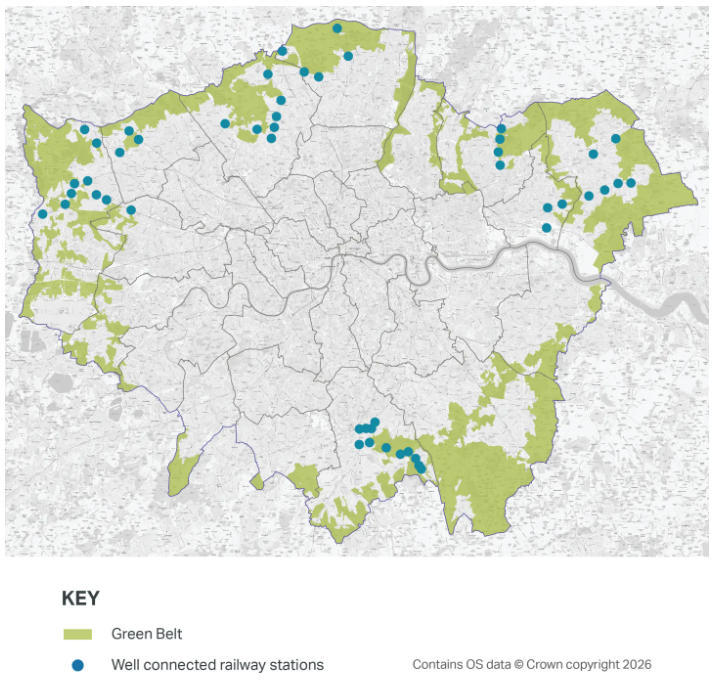
Assembly members suggested that some of the sites identified as BLGs were high-quality Green Belt sites rather than inferior land which the government has sought to build on.
However, Pipe said that any so-called ‘grey belt’ sites that may be available in London are “not necessarily well located for housing”, adding: “The approach is driven by transport and accessibility rather than the quality of the land.”
He also confirmed Khan would tend to oppose any developments pitched outside of the designated BLGs on Green Belt land.
But he warned: “I don’t want to say there will never be a successful application on grey belt, because there could be a development on a car park that wasn’t included in the BLG next to a tube station, for example.”
Last Wednesday (2nd) Pipe, appearing in front of the London Assembly’s housing committee, explained: “Random bits of grey belt and the far-flung bits of London near the M25 are not sustainable in terms of the socio-economic quality of life for those people who would be put in places where there wouldn’t be shops, doctor surgeries, access to hospitals, and so on.
“So again, another reason to choose a well-located place in the Green Belt that is accessible in terms of public transport.”
The draft London Plan states that any Green Belt developments will be “well connected and viably serviced, in turn minimising the amount of land needed”.
It adds: “This will come with improved access to good quality green spaces for Londoners and an increase in biodiversity. The BLGs identified have the greatest potential to meet London’s good growth needs due to existing infrastructure (or opportunity to enhance it).”
The approach was criticised during the same evidence session by campaigners, including John Sadler from environmental group CPRE London, who said the draft London Plan did not have “strong protections” around green spaces and infrastructure.
“There’s a great variety of threats to parks and green spaces which are being built over,” he said. “These are valuable, socially and environmentally. This can be forgotten when we talk about the wider Green Belt. We also need to talk about new parks and green spaces, not just to fight back against what could be lost.
“Some green spaces have been locked up by developers – more could be done to release those sites. More could be done to ensure developers look to build on brownfield first.
“There is some benefit to intensification around transport hubs, but when you start going into Green Belt, there aren’t the services that are needed to make these places work – they are urban sprawl by another name.”
Local news needs your support
We are proud that we were at the forefront of reporting on the recent local elections. We can’t do this without the support of our readers.
Independent news outlets like ours – reporting for the community without rich backers – are under threat of closure, turning British towns into news deserts.
If our coverage has helped you understand our community a little bit better, please consider supporting us with a monthly, yearly or one-off donation.
ACT NOW!
Monthly direct debit


Annual direct debit

£5 per month supporters get a digital copy of each month’s paper before anyone else, £10 per month supporters get a digital copy of each month’s paper before anyone else and a print copy posted to them each month. £50 annual supporters get a digital copy of each month's paper before anyone else.

More information on supporting us monthly or yearly
More Information about donations



 Enjoying Enfield Dispatch? You can help support our not-for-profit newspaper and website from £5 per month.