

New research from the Fire Brigades Union (FBU) suggests exposure to cancer-causing contaminants in buildings has raised health risks, reports Kumail Jaffer, Local Democracy Reporter
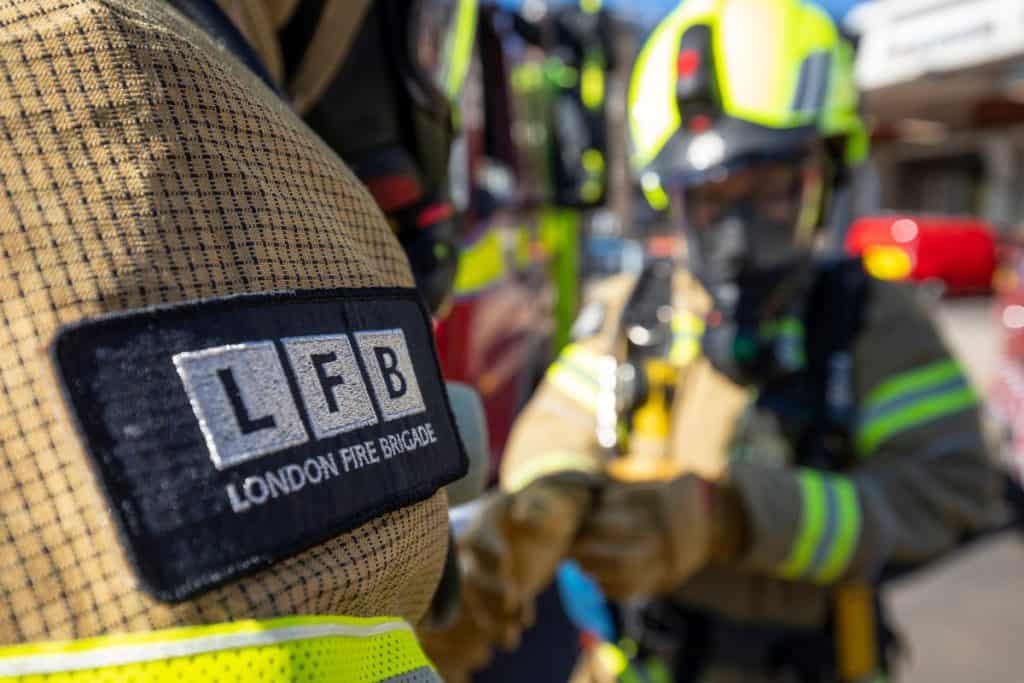
London’s firefighters are uniquely exposed to cancer-causing contaminants due to flame retardants being used in buildings and electric vehicle fires, City Hall has been told.
Recent research commissioned by the Fire Brigades Union (FBU) has indicated that contaminant exposure has directly led to an increased risk, with instances of cancer amongst firefighters aged 35-39 up to 323% higher than the general population in the same age category.
On Tuesday (2nd) the London Assembly’s fire committee heard that current figures, described as “alarming” by FBU officials, were down to the capital’s distinctive factors.
“London Fire Brigade by default is the biggest, the busiest, the largest fire and rescue service in the UK and the fourth largest in the world,” Gareth Beeton, regional chair of the FBU, told the committee.
“So the number of firefighters that are exposed to arguably the largest number of fires as well. It has to have an effect on London firefighters.”
Karl Smith, the London region deputy health and safety co-ordinator for the union, said firefighters are over three times more likely to suffer a cancer diagnosis and that 4% of firefighters surveyed already have one.
“The figures for for any serving firefighter are extremely alarming,” he added.
“The World Health Organization has recognised the occupation of of a firefighter as 1A occupation – this is the highest level of risk for cancer. They’ve actually stated that being a firefighter is the same as equivalent to smoking 20 cigarettes a day.”
Spencer Sutcliff, deputy commissioner at the LFB, said London firefighters faced a “confluence” or risk compared to other cities.
“What separates London from other cities is the well certainly within the UK is just the sheer size of it, particularly the the dense built environment,” he said.
“The increased usage of fire retardants in furnishings, the greater use of chemicals and plastics, has certainly changed the built environment and some of the risk dynamics in London.
“There’s also the gig economy and we know the concerning increase in risk around lithium battery fires.”
Smith said reform was needed both within the LFB and from ministers to drive up safety standards and reduce the current cancer risk.
This includes a culture change within firefighting teams, such as enforced instructions for staff not to put fire gloves in their helmets after use due to the contamination risk. At the moment, he said, there is a “disconnect between the policy and what actually happens in fire stations.”
Sutcliff said there was an “increased awareness” and “cultural change” needed within fire stations.
Even where best efforts are made to follow safety standards, however, funding becomes a limiting factor.
This includes firefighters not being able to “shower within the hour” to get rid of any contaminants because of a lack of availability of relief staff on busy days, as well as older fire stations not having clearly separated dirty and clean areas.
“When your fire gear is taken off, it could be at a point where it’s off gassing,” Smith noted.
“That off gassing is now going from those dirty areas, from appliance bays, from kit rooms, potentially into to rest areas, to food areas, to eating areas, and for us that’s unacceptable. Work is being done to to try and resolve that, but again, the issue is a financial one and it take it takes time.”
Beeton told London Assembly members that funding was the primary limiting factor when it came to upgrading firefighter safety.
“Funding across the LFB is an absolute massive issue for us,” he said.
“Whether it’s firefighters unavailable because there’s no there’s no money for more firefighters, there’s no money for overtime to cover shortfalls, you haven’t got enough spare appliances around London, it it’s starting to cause problems.
“We urge the mayor and and central government really to step up because there’s been no additional funding since the recommendations from the Grenfell Tower Inquiry. The mayor has given found additional funding, but no additional funding from central government, which is what is needed.”
This has meant that older fire stations, especially around north-west London, have not been able to be upgraded to be compliant with LFB’s safety standards.
Beeton added: “It needs massive investment. If you compare London Fire Brigade to Hong Kong, Tokyo, Paris, places like that, we are we are massively under resourced compared to other fire and rescue services.”
Local news needs your support
We are proud that we were at the forefront of reporting on the recent local elections. We can’t do this without the support of our readers.
Independent news outlets like ours – reporting for the community without rich backers – are under threat of closure, turning British towns into news deserts.
If our coverage has helped you understand our community a little bit better, please consider supporting us with a monthly, yearly or one-off donation.
ACT NOW!
Monthly direct debit


Annual direct debit

£5 per month supporters get a digital copy of each month’s paper before anyone else, £10 per month supporters get a digital copy of each month’s paper before anyone else and a print copy posted to them each month. £50 annual supporters get a digital copy of each month's paper before anyone else.

More information on supporting us monthly or yearly
More Information about donations





 Enjoying Enfield Dispatch? You can help support our not-for-profit newspaper and website from £5 per month.