

New research ranks the borough as having the second most confusing guidance for household recycling in London, reports James Cracknell
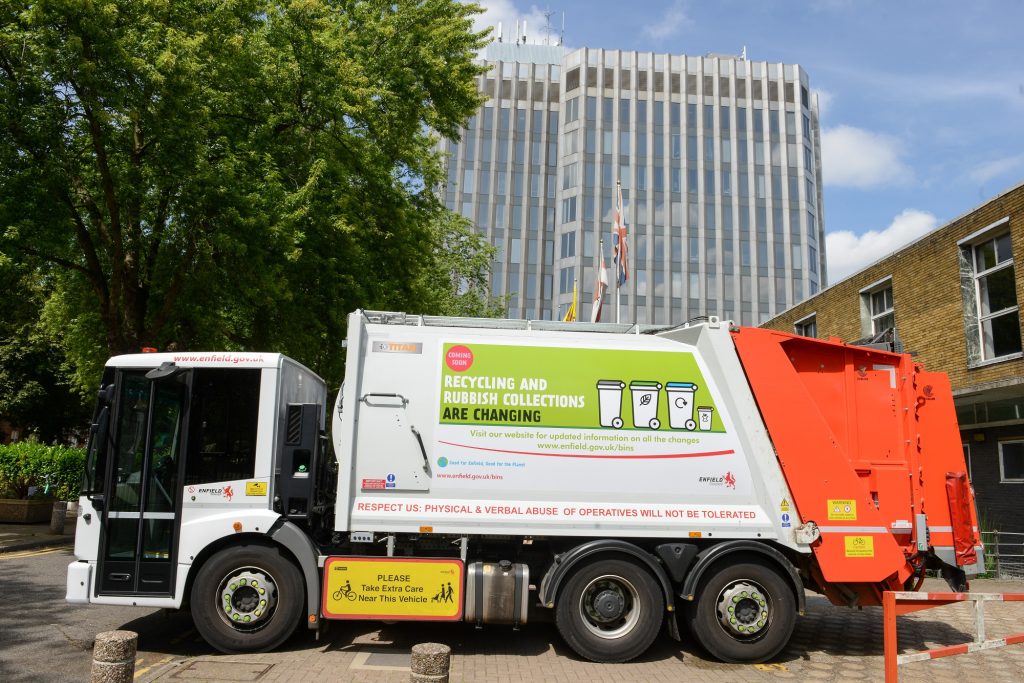
Enfield Council will soon update its website to make its recycling page “easier to understand” after being accused of having among the most “confusing” guidance in London.
Research and analysis by a waste firm in the capital ranked every borough according to how clear and simple their household recycling rules and advice were – with Enfield ranking second for the most confusing guidance.
In its research Business Waste Ltd found that Enfield Council had 87 different rules and exclusions listed for household recycling, including “a substantial amount of small print”.
For example, the company said, “aluminium foil must be formed into a fist-sized ball, glass jars should be rinsed with their lids replaced, and shredded paper needs to be placed inside a paper bag”.
The council also warns that continued contamination, following letters to the household, can eventually result in collections being stopped and a £60 fixed penalty notice being issued.
Business Waste Ltd ranked Enfield as having a “confusion score” for recycling of 69.2 out of 100, behind Bromley on 71.9. The least confusing London borough was named as Havering, with a confusion score of just 11.1.
Mark Hall, a waste management expert for Business Waste Ltd, said “Most recycling decisions are made in a few seconds, usually with the packaging in one hand and the bin lid already open. People are unlikely to search several council pages every time they come across an item they’re unsure how to dispose of.
“If an answer depends on a minor detail, such as its colour, lining or whether two parts need separating, many will either guess or throw it in their general waste bin.
“Unfortunately, this creates problems for both parties as recyclable material can be lost unnecessarily, while incorrect items can contaminate waste streams. Contamination is not always a sign that residents don’t care, it can also mean the guidance didn’t clearly explain a fairly ordinary question clearly enough.
“Councils should aim to keep their core household rules on one current page, use consistent names for containers and place exemptions next to the items they relate to. Clear photographs of common packaging would be a more helpful step than expecting residents to understand technical material names or plastic identification codes.”
Enfield’s domestic recycling rate has declined in recent years and now stands at 32.9%, having previously reached a high of 39.1% back in 2013/14.
Earlier this summer, the new Conservative administration at Enfield Council confirmed it was conducting a review of household waste services with the intention of reintroducing weekly bin collections for both recycling and general waste, for the first time since fortnightly collections were introduced by the previous Labour administration in 2020.
Asked to respond to Business Waste Ltd’s research findings and the borough’s rank as second-most confusing in London for recycling, an Enfield Council spokesperson said: “We are currently reviewing proposals to move to weekly bin collections that we believe will make it easier for residents to manage their waste and to recycle more.
“We are working on a project to refresh the content and advice on our website to make it even easier for residents to understand what can and cannot be recycled.
“Our guidance is designed to help residents recycle as effectively as possible and reduce contamination, which remains a significant challenge for many London boroughs. A comprehensive list of recyclable materials is provided, alongside practical advice on how to prepare items for collection.
“This advice is not intended to make recycling more complicated. Rather, it helps ensure that materials collected from residents can be successfully processed and recycled. For example, rinsing food containers before placing them in recycling bins helps prevent contamination, which can result in otherwise recyclable materials being rejected.
“Simple actions such as: Check it; Flatten it; Rinse it; Lid it; can help maximise the amount of material that is recycled and support our efforts to increase recycling rates across the borough.
“We are committed to providing clear, accessible information and will continue to work with residents to make recycling as straightforward and effective as possible.”
Local news needs your support
We are proud that we were at the forefront of reporting on the recent local elections. We can’t do this without the support of our readers.
Independent news outlets like ours – reporting for the community without rich backers – are under threat of closure, turning British towns into news deserts.
If our coverage has helped you understand our community a little bit better, please consider supporting us with a monthly, yearly or one-off donation.
ACT NOW!
Monthly direct debit


Annual direct debit

£5 per month supporters get a digital copy of each month’s paper before anyone else, £10 per month supporters get a digital copy of each month’s paper before anyone else and a print copy posted to them each month. £50 annual supporters get a digital copy of each month's paper before anyone else.

More information on supporting us monthly or yearly
More Information about donations






 Enjoying Enfield Dispatch? You can help support our not-for-profit newspaper and website from £5 per month.