

An urgent session of the London Assembly’s health committee today heard from NHS experts on the recent measles scare in the borough, reports Kumail Jaffer, Local Democracy Reporter
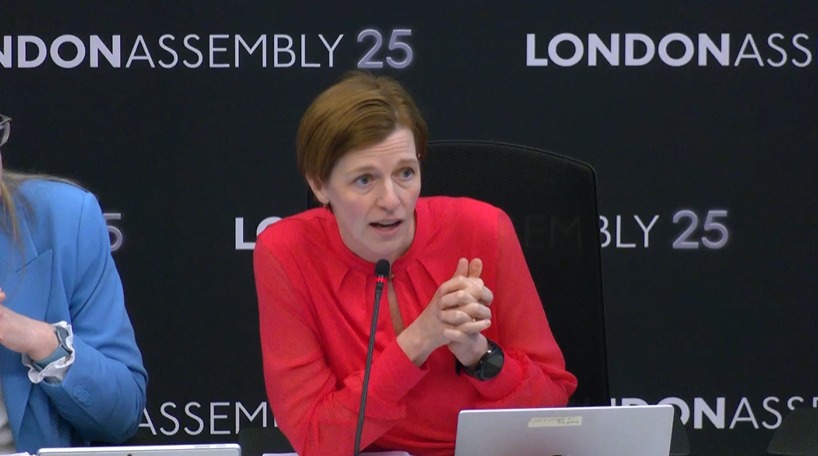
Enfield’s low vaccination rate means there was always a risk of a mass measles outbreak in the borough, an expert has told the London Assembly.
The borough only has a 64.3% vaccination rate for measles, far below the 83.7% national average. This seems to have been the main reason why the borough has borne the brunt of London’s outbreak, with 71 out of 127 confirmed cases in the capital this year being in Enfield.
Its understood that unvaccinated children are the people primarily affected by the disease, with around one-in-five infected needing hospital treatment.
During an extraordinary session of the London Assembly health committee today (Monday 9th), senior health practitioners and experts said the vaccination rate in Enfield was a warning to other parts of London and claimed that solving health inequalities was key to boosting take-up.
Dudu Sher Arami, director of public health for Enfield, told assembly members: “We are the ninth-largest London borough, and a highly deprived borough. We have a higher concentration of children and young people in the areas that are more deprived.
“The east of the borough has more cases and a lower vaccination rate than the west. Enfield is not unique – we have seen outbreaks in other boroughs.
“Any place where we have low vaccination uptake is at risk of an outbreak – it just happens that this time it’s Enfield. This is an opportunity to think nationally, especially around health inequality. Localised community engagement is a very effective way of opening up communication around vaccines and building trust.”
Susan Elden, a public health consultant at NHS England, said the health service was not confident in bringing numbers down in the long-term unless vaccination rates significantly increased across London and the UK.
“We will only be confident once we have 95% [vaccination] coverage and measles-free status.
“We can’t do this alone as the NHS, it needs to be done through local authorities and the Greater London Authority. It’s a global thing, people have vaccine fatigue. There’s something about our vaccination systems coming up to speed with our modern world – they were set up in the 1940s.
“Pre-pandemic, if there was a vaccination message, people would go – but now people are thinking differently. It’s about making sure that we are making that compelling case and using all the trusted sources. People need that confidence at an individual level.”
Officials also suggested the situation appeared to be “stabilising” but could not give any guarantees that either Enfield or the capital were on a downward trend.
Nalini Iyanger, a consultant in health protection at the UK Health Security Agency (UKHSA), told assembly members: “This is four-to-five times as infectious as Covid.
“It is a situation under close monitoring, it is stabilising but we are keeping a very close eye on it. We’re doing everything we can to control it, but I can’t say numbers won’t go up.”
However, Katherine Richardson, director of resilience at the Greater London Authority (GLA), noted that it was “impossible for measles to get to the pandemic stage because of the levels of vaccination that we do have”.
In a social media post, Mayor of London Sir Sadiq Khan said today: “Measles is highly infectious and cases are on the rise in London. Make sure you and your children are up to date with your MMRV jabs.”
Emma Best, chair of the London Assembly’s health committee, told the Local Democracy Reporting Service (LDRS) after the meeting: “We’ve heard clearly from experts today, that the measles outbreak in North London is not yet fully contained. As long as there are pockets of people who remain unvaccinated, the risk of further spread remains very real.
“Measles is highly contagious and around one-in-five people who catch it require hospital care, with emergency departments already seeing an increase in suspected cases. Because of necessary strict isolation measures required, this is placing additional pressure on NHS services.
“The vaccine is safe, tried and tested, and even a single dose provides around 90% protection. The priority now must be targeted community outreach to boost vaccination uptake – across all boroughs and across the UK.
“Without decisive action, this risks becoming a slow-burning public health problem that not only fuels further outbreaks but also diverts vital NHS resources away from other routine programmes.”
Local news needs your support
We are proud that we were at the forefront of reporting on the recent local elections. We can’t do this without the support of our readers.
Independent news outlets like ours – reporting for the community without rich backers – are under threat of closure, turning British towns into news deserts.
If our coverage has helped you understand our community a little bit better, please consider supporting us with a monthly, yearly or one-off donation.
ACT NOW!
Monthly direct debit


Annual direct debit

£5 per month supporters get a digital copy of each month’s paper before anyone else, £10 per month supporters get a digital copy of each month’s paper before anyone else and a print copy posted to them each month. £50 annual supporters get a digital copy of each month's paper before anyone else.

More information on supporting us monthly or yearly
More Information about donations

 Enjoying Enfield Dispatch? You can help support our not-for-profit newspaper and website from £5 per month.