

Crews Hill Golf Course and a site next to the M25 also look set to be protected from development after government inspector’s letter to the council, reports James Cracknell
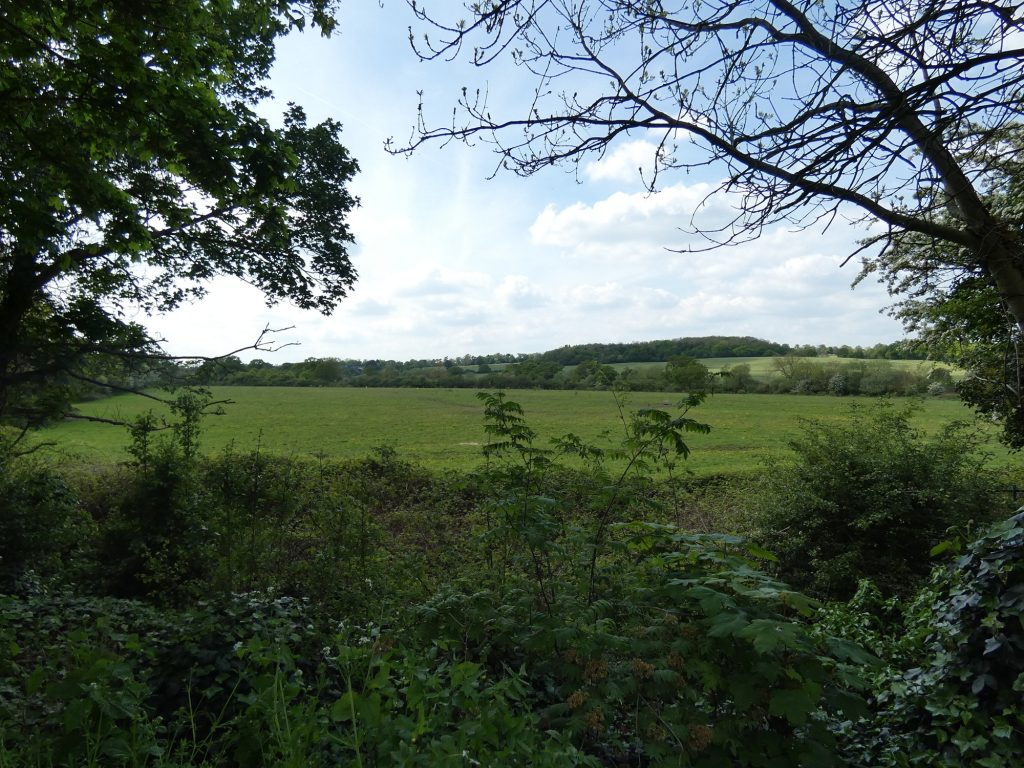
A government-appointed planning inspector has told Enfield Council to cancel its plans for 160 new homes on the Green Belt at Hadley Wood – and also restrict a number of other proposed development sites.
Inspector Steven Lee today (Monday 15th) issued his long-awaited verdict on the council’s Enfield Local Plan, which had included the proposed de-designation of several Metropolitan Green Belt sites in the borough, to allow developers to build on them.
After 29 days of public examination hearings over the past 18 months – which heard considerable evidence over whether or not the Local Plan should be deemed legally ‘sound’ – the inspector has concluded that the document needs a series of major modifications in order to comply with the law.
As well as completely removing the allocation of 160 homes on Green Belt land to the west of Hadley Wood Station, Lee has also recommended that most of Crews Hill Golf Course be kept within the Green Belt and said the council “should consider” cancelling the allocation of 200 homes for the golf course – which is a site of importance for nature conservation (Sinc).
In addition, the inspector has instructed the council to lower its height limits for any new development at Palace Gardens Shopping Centre and to remove the allocation of a new industrial site on land to the east of junction 24 of the M25, which is also currently Green Belt.
Regarding Hadley Wood, Lee wrote in his letter to the council that its assessment of the likely harm caused by building 160 homes on three fields between Camlet Way and Crescent Way was in his view an “underestimate” and that “even with mitigations in place” the proposed development “would have a significant detrimental effect on the existing character of this area”.
The three fields – currently used for grazing animals – are owned by the Duchy of Lancaster. During a public examination session last June looking at the council’s plans for the area, a representative of the regal landowner said that it was intending to submit a planning application as soon as 2026.
But in his letter, Lee concluded: “I do not consider the exceptional circumstances needed to demonstrate removal of this site from the Green Belt have been demonstrated. Accordingly, the council should draft modifications deleting the site from the plan, reintegrating the land into the Green Belt and making consequential changes to the other relevant policies.”
In making this recommendation, the inspector also referenced the “very significant effects” on the Green Belt of the council’s housing allocations at Crews Hill (5,500 homes) and ‘Chase Park’ (3,700 homes).
However, because these sites are much larger, they “will allow a far greater degree of mitigation or enhancement to be provided that could help to minimise those impacts”.
For this reason, Lee has not recommended the removal of these two Green Belt housing sites from the Local Plan – only going as far as the suggestion of protecting Crews Hill Golf Course, because of its biological value.

Regarding the golf course, Lee wrote: “The creation of a new defensible boundary by the development itself would be preferable to rolling back the Green Belt boundary excessively and risking even greater encroachment than currently anticipated.”
The inspector added that an alternative “acceptable” approach would be to use Cattlegate Road as the new Green Belt boundary to the west of Crews Hill Station, thereby safeguarding the entire golf course from development.
“I do not consider the reduction in delivery of 200 dwellings would undermine the justification for the overall placemaking area,” Lee said.
Proposed development of another nature conservation site in Crews Hill, called Glasgow Stud, should also be limited, the inspector argued. He wrote: “The council should therefore draft modifications which limit Green Belt release in or around the Glasgow Stud SINC to those areas where development is intended or where it would otherwise leave an area of Green Belt to be disconnected or isolated from the remainder.”
Lee also made some recommendations for the proposed ‘Chase Park’ development, on land at Vicarage Farm and surrounding areas in World’s End. However, unlike at Crews Hill, he has not suggested a reduction in its size.
Instead, the inspector focused on the proposed extension to Trent Park, which developer Comer Homes admitted during the public examination that it wished to ditch.
Lee wrote in his letter: “Given the extension of the country park is a key part of the mitigation for this allocation, then it is important that it is delivered as envisaged. Therefore, to be effective the policy should include a mechanism that ensures the country park extension is delivered in a timely manner alongside the delivery of any housing.”
During the public examination process, the government proposed that both Crews Hill and Chase Park become a so-called ‘new town’ with 21,000 homes, more than doubling what the council was putting forward in the Local Plan.
This even larger housing scheme – potentially shrinking Enfield’s Green Belt by 30% – led to growing local anger and opposition which then became a central theme of this year’s local election, where the Conservative and Green parties together won eleven council seats from Labour after both pledging to “protect the Green Belt”.
These gains were enough to oust the Labour administration, with new Tory council leader Alessandro Georgiou subsequently announcing the council’s formal withdrawal from the government’s new towns programme – a move which this month prompted Prime Minister Sir Keir Starmer to denounce Enfield Council as “naysayers” and “blockers”.
Although it now seems likely that City Hall will establish a mayoral development corporation to deliver the new town instead, as a way of working around the council’s objections, the civic centre maintains control over what happens next to its own Local Plan.
Reacting to Lee’s letter today, deputy council leader Mike Rye said: “Enfield’s new administration was elected on a clear mandate to protect the borough’s heritage, character, and green spaces.
“We have inherited the draft Local Plan from the previous administration, having consistently expressed our concerns about its potential impact on Enfield.
“The planning inspector’s findings reflect some of those concerns, and we welcome the recommendation to remove certain development sites from the Green Belt.
“We will now review the findings in full before determining the right next steps for our borough.”
Local news needs your support
We are proud that we were at the forefront of reporting on the recent local elections. We can’t do this without the support of our readers.
Independent news outlets like ours – reporting for the community without rich backers – are under threat of closure, turning British towns into news deserts.
If our coverage has helped you understand our community a little bit better, please consider supporting us with a monthly, yearly or one-off donation.
ACT NOW!
Monthly direct debit


Annual direct debit

£5 per month supporters get a digital copy of each month’s paper before anyone else, £10 per month supporters get a digital copy of each month’s paper before anyone else and a print copy posted to them each month. £50 annual supporters get a digital copy of each month's paper before anyone else.

More information on supporting us monthly or yearly
More Information about donations




 Enjoying Enfield Dispatch? You can help support our not-for-profit newspaper and website from £5 per month.