

Enfield is believed to be one of the worst-affected boroughs in London for domestic waste pollution entering rivers, reports Finn Logue

Sewage ‘misconnections’ are causing high levels of pollution across Enfield’s rivers – leading to significant ecological issues and impact on wildlife.
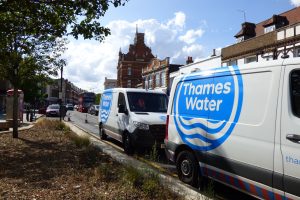
Thames Water figures recently highlighted by regional news outlet London Centric showed 409 misconnections had been recorded in Enfield since 2020, the most of any London borough, although most have since been fixed. Neighbouring Haringey borough was named as having the most ‘live’ misconnections, with 161.
Every property in Enfield has two drainage systems; one for foul wastage which is directed to sewage plants, and another for surface level rainwater which is redirected back into Enfield’s tributary rivers such as the Pymmes Brook, Salmons Brook and Turkey Brook.
Misconnections occur when foul waste water intended for sewage drains is wrongly connected to the surface water system instead, meaning it is subsequently pumped into Enfield’s waterways. The problem only incurs in boroughs – mostly in outer London – with separate systems for storm and waste water.
The Department for Environment, Food and Rural Affairs (Defra) estimates that between 150,000 and 500,000 households in the UK have misconnections.
A spokesperson for the environmental charity Thames21 said: “In areas of London with separate wastewater and stormwater drainage systems – which is mainly outer London – misconnected pipes can lead to raw sewage and other wastewater from sinks and washing machines, being discharged directly into London’s rivers.
“Misconnections are often only discovered by tracing storm outflows back to individual households.
“Part of the solution lies in better information and awareness. We are keen to keep on raising awareness of this issue to tackle the problem.”
Peter Leedham, a campaigner with river action group Pymmes Brookers, said that the issue was likely to be far more widespread than the numbers suggest. At a loose estimate, he believes 4-5% of all properties in the borough contain misconnected sewage drainage, causing significant ramifications for Enfield’s rivers.
He added that it was “virtually impossible” to confirm the numbers of affected properties because a “lack of resource” was inhibiting Thames Water, Enfield Council, and other environmental groups from discovering the true extent of the issue.
Speaking to the Dispatch, Peter said: “[These groups] don’t have the resources. So they’re not looking for pollution. They’re not looking for what might be happening in the upper reaches of Salmon’s Brook.
“Only if they’re told there’s a problem will they react. They’re reactive, not proactive. And if we’re going to solve this problem, they’ve got to be proactive.”
Pymmes Brookers holds regular meetings with Enfield Council and Thames Water, as well as consulting with the Environmental Agency on a national level to raise awareness of the misconnections issue.
Asked about Enfield Council’s role in preventing this problem, Sabri Ozaydin, cabinet member for environment, said: “Sewage misconnections are a serious problem in Enfield and across London, and they are a major cause of sewage and pollution entering our rivers.
“While some issues are linked to old or poorly altered plumbing, Thames Water has primary responsibility to properly manage the sewer network and take action when problems are identified.
“Enfield Council works closely with Thames Water to report and investigate misconnected pipes. We expect Thames Water to take stronger and faster action to fix faults in the public system to prevent sewage pollution in our waterways. Where polluters can be identified, we will take enforcement action.”
Misconnected pipes are illegal and, according to Thames Water, “the property owner is responsible”. But according to Peter, most people are completely unaware of their misconnected pipes and a lack of general education and funding is preventing their discovery.
He said: “The only way you can begin to identify and solve this is by, I think, having funds available to inspect every property every few years. There should be a statutory drainage certificate issued, like there is a gas certificate.
“To get these funds and resourcing, it’s higher up that we need to get to. We need to get this whole business elevated on the public awareness so that politicians have to take note of it and do something about it.
“Our rivers in North London haven’t had fish in them for years because of this pollution. So the Environmental Agency has got an absolutely wonderful excuse for not doing anything, because there are no fish left to kill.”
Thames Water were approached for comment but did not respond.
Local news needs your support
We are proud that we were at the forefront of reporting on the recent local elections. We can’t do this without the support of our readers.
Independent news outlets like ours – reporting for the community without rich backers – are under threat of closure, turning British towns into news deserts.
If our coverage has helped you understand our community a little bit better, please consider supporting us with a monthly, yearly or one-off donation.
ACT NOW!
Monthly direct debit


Annual direct debit

£5 per month supporters get a digital copy of each month’s paper before anyone else, £10 per month supporters get a digital copy of each month’s paper before anyone else and a print copy posted to them each month. £50 annual supporters get a digital copy of each month's paper before anyone else.

More information on supporting us monthly or yearly
More Information about donations


 Enjoying Enfield Dispatch? You can help support our not-for-profit newspaper and website from £5 per month.