

Figures show more than a quarter of escalators on the London Underground are operating beyond their expected lifespan, reports Kumail Jaffer, Local Democracy Reporter
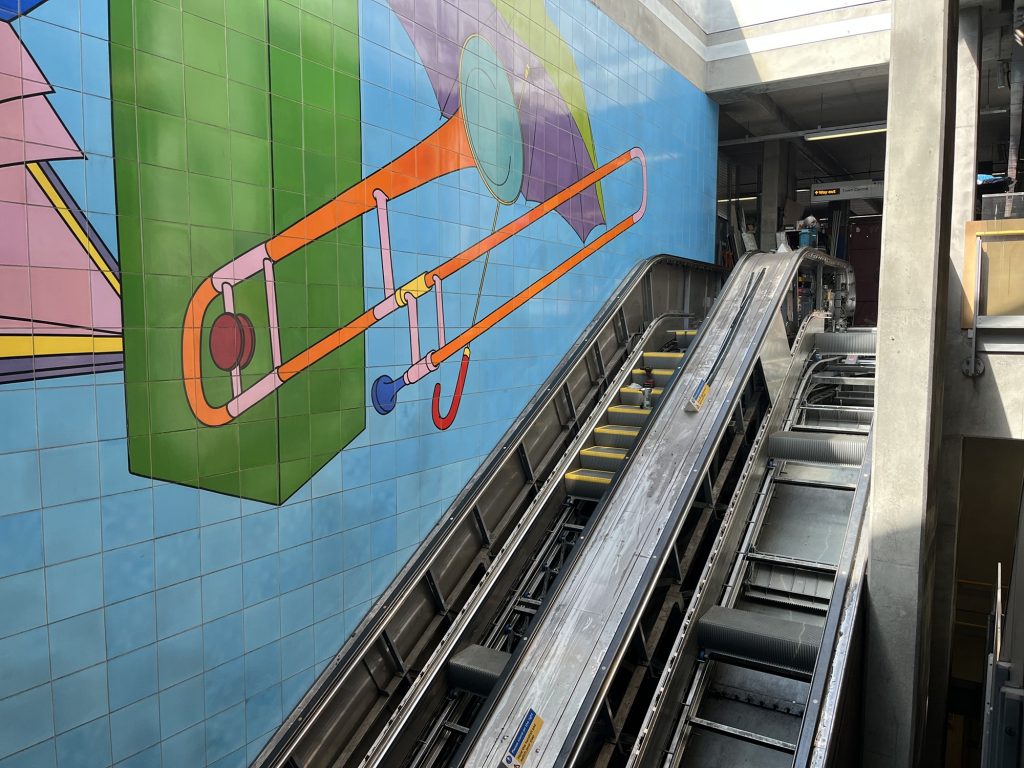
Transport for London (TfL) must make broken and ageing escalators a funding priority to ensure the mayor’s active transport targets are feasible, a senior London assembly member has said.
Elly Baker, transport spokesperson for the City Hall Labour group, said more of the network’s budget needs to be spent on refurbishing and replacing the moving stairways – or risk putting more Londoners off public transport.
Freedom of Information Act data released last month revealed that 153 out of 566 escalators – over a quarter – on the London Underground are operating beyond their expected lifespan.
In 2025/26, TfL spent £56.1million on escalators, including £38.6m of operating expenditure and £17.5m of capital expenditure to upgrade, renew and modernise the assets, according to the mayor’s office. However, in the same period, TfL was forced to spend £1.3m on “reactive maintenance call-outs for escalators.”
This included urgent work to repair one of the escalators at Southgate Station at the start of this year, with passengers unable to enter for two months as a result.
Baker said transport chiefs should make escalator maintenance a priority, despite a stretched budget.
“It’s really important that Londoners are able to get round the city reliably, that they know when they get to their station, they’re going to be able to get on and off the train,” she told the Local Democracy Reporting Service (LDRS).
“For so many, the escalator is an essential part of that. It’s really, really important that we make sure escalators are working on the tube – [but] I am concerned that TfL aren’t giving it enough of a priority.”
City Hall has a target for 80% of journeys in London to be made by foot, bicycle or public transport by 2041.
If escalators are intermittently out of action, however, this could put off people from using the network.
“London doesn’t work unless our transport system works,” Baker said. “By and large, all our journeys work perfectly. But every time that somebody goes to a station and finds an escalator’s out of order – sometimes that means the station’s actually closed – they may feel the network is less reliable, and maybe they’re just slightly less likely to use the Tube in the future, and that’s not acceptable.”
The LDRS was interviewing Baker at Woolwich Arsenal DLR Station where, at one point last year, three out of four escalators were out of action. Work will not be complete at the Greens End entrance until later this month, TfL has said.
The Labour assembly member said TfL has recently shifted from a model where they would refurbish escalators after 20 years and completely replace them after 40 to taking a “risk-based approach”, where they are closely monitored, in order to save money.
However, she says this has led to “more and more escalators going out of service unexpectedly”.
The network’s escalators are maintained either by Otis or London Underground’s in-house escalator maintenance team, the mayor confirmed last month.
“The priority for TfL has to be making sure that the things that matter to passengers are taken really, really importantly.
“I believe escalators are safe. I trust TfL with the safety of the network. It’s not what I’m asking about. I’m asking about the experience of passengers, and for them to prove that it’s a priority for them. And I think TfL – a really important organisation who do great work getting us around – sometimes they don’t listen to Londoners about what’s most important to them.”
In June, Baker wrote to TfL commissioner Andy Lord to criticise the approach “which means escalators are breaking down unexpectedly and requiring unplanned station closures or with refurbishment and replacement taking multiple escalators out at a time simply does not make sense for tube passengers”.
Earlier this month, Lord defended TfL’s move away from the “outdated” age-based intervention method and said the network “must balance the needs and risks of escalator faults against all other TfL assets such as renewing track infrastructure and ageing structures” due to “significant financial constraints”.
A TfL spokesperson told the LDRS: “We work hard to keep our escalators in good working order, and this includes regular safety checks and a proactive rolling maintenance programme.
“Escalator availability on the London Underground is at around 95%, despite heavy usage of around six million escalator journeys every day across a network that is over 160 years old in some areas.
“Inevitably, a small number of escalators have had to be temporarily withdrawn from service or are subject to increased maintenance and inspection regimes to ensure they can continue operating with acceptable levels of reliability.
“Funding for replacing these highly complex machines is subject to a prioritisation process which examines assets across the whole TfL network, looking at customer usage and the latest safety and condition assessments.”
Local news needs your support
We are proud that we were at the forefront of reporting on the recent local elections. We can’t do this without the support of our readers.
Independent news outlets like ours – reporting for the community without rich backers – are under threat of closure, turning British towns into news deserts.
If our coverage has helped you understand our community a little bit better, please consider supporting us with a monthly, yearly or one-off donation.
ACT NOW!
Monthly direct debit


Annual direct debit

£5 per month supporters get a digital copy of each month’s paper before anyone else, £10 per month supporters get a digital copy of each month’s paper before anyone else and a print copy posted to them each month. £50 annual supporters get a digital copy of each month's paper before anyone else.

More information on supporting us monthly or yearly
More Information about donations





 Enjoying Enfield Dispatch? You can help support our not-for-profit newspaper and website from £5 per month.