

Empowering Disability in Enfield calls on the NHS to tackle digital exclusion across its services
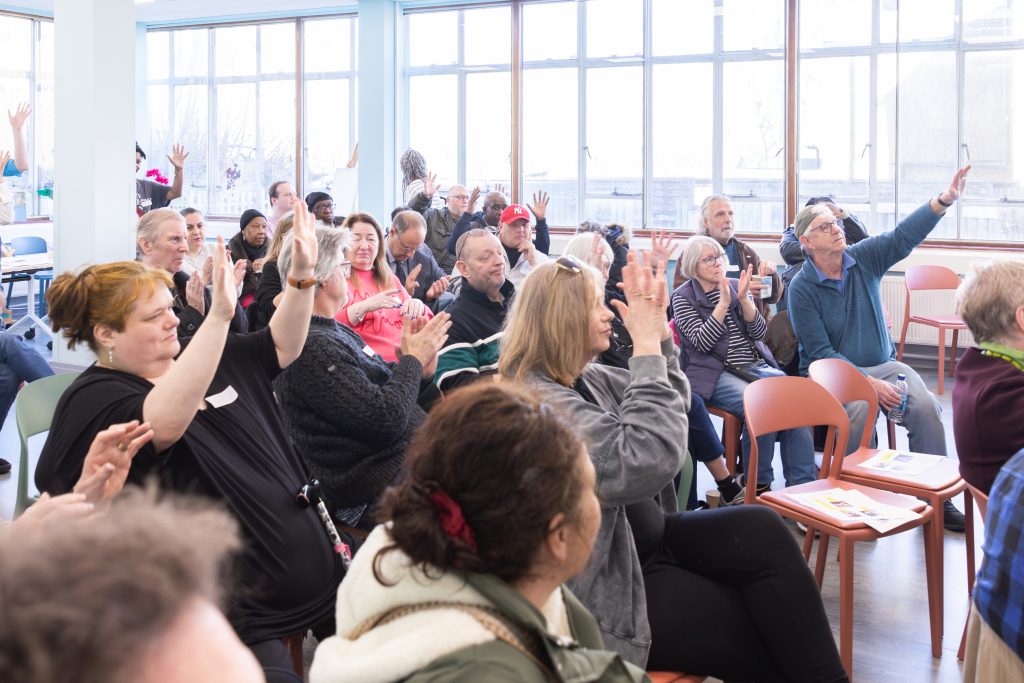
The NHS increasingly tells us that the future of healthcare is digital.
Book appointments online, order prescriptions through an app, complete forms on a website, receive reminders by text message.
For many people, these changes have made life easier. For many disabled people, they have done the opposite.
Across Enfield, disabled residents are finding themselves locked out of essential healthcare because services once accessed through human interaction are now increasingly accessed through technology.
Many people with visual impairments cannot easily navigate websites or apps. Some people with hearing impairments struggle with automated systems. Many people with learning disabilities need support to understand online processes. Others live with neurological conditions, cognitive impairments or mental health conditions that make digital systems difficult or impossible to use.
Disabled people are also more likely to experience digital poverty. Many cannot afford reliable broadband, suitable devices or enough mobile data. Disability and poverty often combine to create multiple barriers to healthcare.
Several local residents have told Empowering Disability in Enfield (EDIE) they now rely on relatives just to book a GP appointment because the online system is inaccessible. What was once a private task now depends on someone else’s time and support.
This is not simply inconvenient. It affects independence, dignity and privacy.
The NHS already knows
What makes this particularly concerning is that NHS England already recognises digital exclusion as a significant health inequality.
It has published an Inclusive Digital Healthcare Framework stating that digital services should complement – not replace – non-digital access. It has also developed a Digital Exclusion Risk Atlas
identifying communities most at risk, including many disabled people.
In other words, the NHS already knows. It knows who is at risk. It knows where exclusion exists. It knows the consequences.
This changes the conversation. The issue is no longer whether enough evidence exists. The evidence already exists. The question is why services continue to be designed in ways that produce the very exclusion the NHS has already identified.
A question of rights
The Equality Act 2010 places a proactive duty on service providers to make reasonable adjustments where disabled people are placed at a substantial disadvantage. The NHS is also subject to the Public Sector Equality Duty, requiring public bodies to eliminate discrimination and advance equality of opportunity.
These duties require organisations to anticipate barriers rather than waiting for people to complain. Where organisations know disabled people cannot access healthcare because of digital barriers, yet fail to provide effective alternatives, they risk breaching these legal duties.
Once exclusion has been identified, mapped and measured, it becomes increasingly difficult to argue that unequal outcomes were unforeseen. Knowledge creates responsibility.
Designing with disabled people
This is not an argument against technology. Digital services can improve access when they are designed inclusively. But technology should expand access, not replace it.
Sometimes the most important accessibility tool is another human being. A receptionist who understands someone’s communication needs; a member of staff who can help complete a process; a face-to-face conversation instead of another online form.
Disabled people should not simply be consulted after decisions have been made. They should help design services from the beginning. Every GP practice has a patient participation group where local people can influence how services are delivered.
Digital exclusion should be a standing item on every agenda. The NHS has already identified digital exclusion as a health inequality. It has already gathered the evidence.
The question is no longer whether the system knows what needs to be done. The question is whether it is prepared to do it.
EDIE is a lived experience working group supported by LocalMotion Enfield. We are working with disabled residents to understand the barriers people face and to help create public services that are designed with disabled people, not simply for them.

This article is published with support from LocalMotion Enfield, part of a UK-wide movement for community-led change
Local news needs your support
We are proud that we were at the forefront of reporting on the recent local elections. We can’t do this without the support of our readers.
Independent news outlets like ours – reporting for the community without rich backers – are under threat of closure, turning British towns into news deserts.
If our coverage has helped you understand our community a little bit better, please consider supporting us with a monthly, yearly or one-off donation.
ACT NOW!
Monthly direct debit


Annual direct debit

£5 per month supporters get a digital copy of each month’s paper before anyone else, £10 per month supporters get a digital copy of each month’s paper before anyone else and a print copy posted to them each month. £50 annual supporters get a digital copy of each month's paper before anyone else.

More information on supporting us monthly or yearly
More Information about donations


 Enjoying Enfield Dispatch? You can help support our not-for-profit newspaper and website from £5 per month.