

In the final article of a three-month series about government regulation of social media, local school students Megan Ledain, Jessica Ampong and Charlotte O’Donoghue sum up their thoughts on the issue and how it impacts them
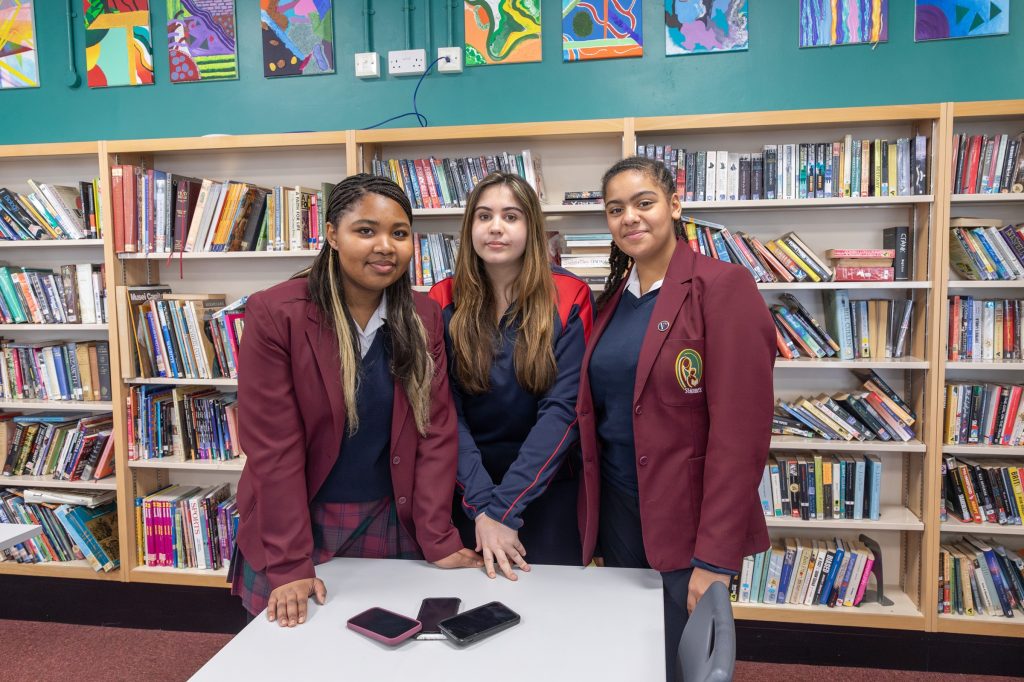
Over the past few months, we have explored one big question: should social media be banned for under-16s in the UK?
If you’ve been following this series, you might remember that we shared our own experiences as young people growing up online in our first article. In the second, we spoke to students, teachers, parents and other adults to hear a wide range of perspectives.
Now, in this final article, we want to share our closing thoughts – and explain why this issue is far more complicated than simply banning or allowing social media.
During the three months we were working on writing these articles, the House of Commons voted against introducing a full social media ban for under-16s, at least for now. It means that the conversation is moving more towards safety, regulation and education.
For many of us, this decision felt like a relief. Social media is important to our daily lives, not just for fun but for connection. It’s how we communicate with friends, learn new things, express ourselves creatively and even get support when we need it.
But, through this project, we have also begun to understand why some adults strongly support stricter restrictions.
For many parents, teachers and even some young people, calls for a ban do not come from wanting to control us, they come from wanting to protect us.
In our interviews, concerns about online bullying, harmful content, unrealistic beauty standards, addiction, slop channels, shortened attention spans and mental health challenges came up repeatedly.
We hear those fears. We feel them too.
Adults are witnessing how constant digital exposure can affect young minds and many are understandably worried about the long-term consequences. So, while we may not all agree with a full ban, we believe it’s important to acknowledge that those who support stronger restrictions are acting from a place of care.
Even social media companies are showing that they are aware that pressure is growing. Platforms like Instagram have introduced teen accounts, designed to offer safer privacy settings, more parental controls and tighter content restrictions. They see that if they don’t adapt, they risk losing younger users in the long run.
These changes may be presented as safety measures, but they also raise an important question: are companies making these changes primarily to protect young people, or are they offering controls now to avoid losing younger users and future profits?
Regardless of the answer, we have learned that social media is not just about personal choice. It is shaped by governments, schools, parents and major companies.
As the next generation, we believe that education, guidance and balance are more realistic than an outright ban. We need honest conversations about online safety, stronger parental tools and support, and a clearer understanding of the opportunities and risks of online spaces. At the same time, we also need space to connect, create and communicate responsibly.
Completely banning social media may not deal with the root issues, especially when technology is such a major part of modern life, but leaving young people unsupported online is not the answer either.
Throughout this journey, there were many opportunities for our minds to be changed.
We listened carefully, considered many perspectives, and genuinely reflected on the concerns people shared. But ultimately, we ended where we began: we want you to trust us and support us, without simply limiting us.
If this series of ours has shifted your perspective, we hope it encourages you to let the young people around you know that you understand them more deeply now. Together, we can work towards balancing safety and access to one of the most powerful tools for communication and connection the world has ever seen.
Our generation deserves the chance to learn how to use social media wisely, safely and meaningfully.
Who knows, maybe we’re the future or something :)
This article is published with support from LocalMotion Enfield, part of a UK-wide movement for community-led change

Local news needs your support
We are proud that we were at the forefront of reporting on the recent local elections. We can’t do this without the support of our readers.
Independent news outlets like ours – reporting for the community without rich backers – are under threat of closure, turning British towns into news deserts.
If our coverage has helped you understand our community a little bit better, please consider supporting us with a monthly, yearly or one-off donation.
ACT NOW!
Monthly direct debit


Annual direct debit

£5 per month supporters get a digital copy of each month’s paper before anyone else, £10 per month supporters get a digital copy of each month’s paper before anyone else and a print copy posted to them each month. £50 annual supporters get a digital copy of each month's paper before anyone else.

More information on supporting us monthly or yearly
More Information about donations






 Enjoying Enfield Dispatch? You can help support our not-for-profit newspaper and website from £5 per month.