

Vicki Pite from Enfield Climate Action Forum explains why People’s Emergency Briefing is essential viewing for everyone
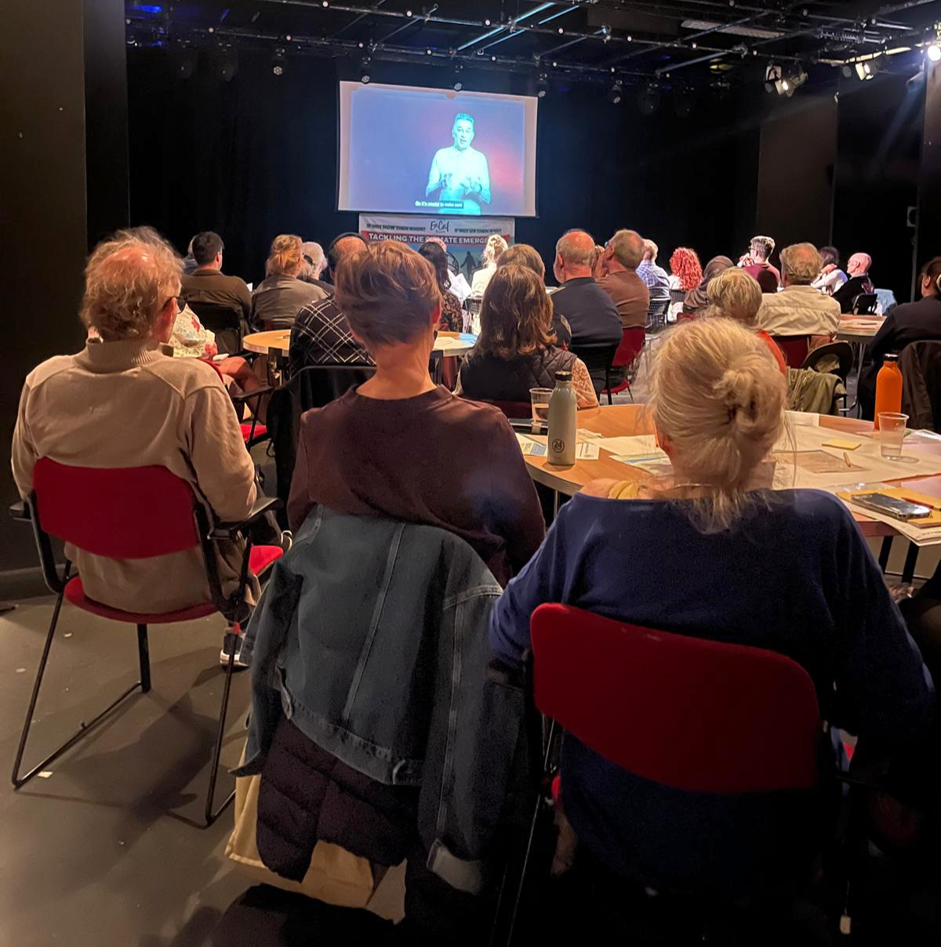
Last month a packed Dugdale Arts Centre waited expectantly for a public screening of People’s Emergency Briefing sponsored by Enfield Climate Action Forum (EnCaf).
The origin of the film was an event held in Westminster Hall last November, the first ‘National Emergency Briefing‘ (NEB).
The UK’s top scientists, economists and doctors briefed MPs and decision-makers on the implications of climate and nature breakdown for all areas of our lives, and the film shown at the Dugdale last month was an edited record of that event.
Naturalist and TV presenter Chris Packham introduced the film by promising that it would initiate “the honest local conversation we now urgently need” and “what we can do, together with our politicians, to build a better future”.
And so it did. But realising this aim requires nationwide, viral, viewing.
Therefore ‘NEB Priority 1’ is to show the film nationwide on primetime TV. This means persuading our MPs to join over 100 of their colleagues in a parliamentary call for a national televised briefing. We need our decision makers to back it. Hence, we were delighted to see Southgate and Wood Green MP Bambos Charalambous in the audience.
The film was simple in format – ten of the nation’s leading scientists and experts presented the unfiltered facts on the impact of increasing global temperatures on climate and nature and the consequence for life in the UK. That “physics doesn’t do politics” raised a knowing laugh.
Authentic, provocative images, not “warnings about what might happen in the future” but “what is happening right now”, underpinned the experts’ warnings about the risks under these headings: ‘extreme weather events’, ‘food security’, ‘health’, ‘national security’ and ‘nature’.
The message, in a nutshell, was a potential “cascade of crisis” risking an “ungovernable state”.
Following the screening, participants were invited to examine their emotional response to the film and reflect on actions that they might consider taking as a result.
The audience was left with little doubt that what we had witnessed deserved to be called an emergency. Some expressed anger or sadness at “hearing the truth”. Others were accepting and fatalistic.
But discussions quickly focused on the sort of reaction we envisage in response to a ‘national emergency’. Should it be like the response to the Covid-19 pandemic, we wondered?
If nature is “part of our critical infrastructure” how can we justify building on green belt countryside? What does “delay never pays” mean in practice?
What surprised and encouraged many were the final sessions, called ‘economy’, ‘tipping points’ and ‘energy transition’ that revealed the possibilities of credible, positive action and elicited expressions of optimism “because we can take action”, through the “necessary levels of adaptation are huge”.
Scepticism was expressed about governments’ capacity to deliver and the “lobbying power of the corporates” that fuels consumerism, waste and exploitation of natural resources.
Ultimately, the success of the event can be measured by participants’ positive response to ‘NEB Priority 2’, i.e. an ambition to get others to watch the film. More details can be found here.
Local news needs your support
We are proud that we were at the forefront of reporting on the recent local elections. We can’t do this without the support of our readers.
Independent news outlets like ours – reporting for the community without rich backers – are under threat of closure, turning British towns into news deserts.
If our coverage has helped you understand our community a little bit better, please consider supporting us with a monthly, yearly or one-off donation.
ACT NOW!
Monthly direct debit


Annual direct debit

£5 per month supporters get a digital copy of each month’s paper before anyone else, £10 per month supporters get a digital copy of each month’s paper before anyone else and a print copy posted to them each month. £50 annual supporters get a digital copy of each month's paper before anyone else.

More information on supporting us monthly or yearly
More Information about donations





 Enjoying Enfield Dispatch? You can help support our not-for-profit newspaper and website from £5 per month.